Introduction and demographics
Documentation has always mattered. In 2026, it has become infrastructure.


1,131 people across the documentation industry responded to the 2026 State of Docs survey — more than 2.5x the number of respondents last year. But the size of the sample matters less than what it represents: a genuine cross-section of the people who create, manage, evaluate, and depend on documentation.
Documentation’s role in purchase decisions is stable and strong, and the case that docs drive business value is well established. The shift this year is in what documentation is being asked to do, and who — and what — is consuming it.
AI has crossed the mainstream threshold for documentation, both in how docs get written and how they get consumed. Users are arriving through AI-powered search tools, coding assistants, and MCP servers. Documentation is becoming the data layer that feeds AI products, onboarding wizards, and developer tools. The teams investing in this shift are treating documentation as context infrastructure, not just a collection of pages.
But adoption has outrun governance, and the gap matters. Most teams are using AI without guidelines in place, and documentation carries a higher accuracy bar than most content. After all, one wrong instruction can break a user’s implementation and erode trust in the product.
The teams getting real value from AI aren’t the ones using it the most — they’re the ones using it in the right places: gathering information, detecting product changes, enforcing style at scale, running QA against source code. The bottleneck for documentation was never the writing itself. It was everything that had to happen before and after.
The profession is undergoing its most significant transformation in a generation. The writing-to-review shift is the clearest finding in this report. Writers are spending less time drafting and more time fact-checking, validating, and building the context systems that make AI output worth refining. The role isn’t shrinking, but being reshaped around the things AI can’t do: user empathy, product judgment, and the ability to make relevant meaning out of complexity.
The biggest missed opportunity remains measurement. Teams believe docs drive business value but have trouble proving it. The teams that close that gap — connecting documentation to conversion, retention, and support deflection — will have a significant strategic advantage.
This report consists of nine sections drawing on survey data and more than 30 in-depth interviews with practitioners across companies like Docker, PostHog, dbt Labs, New Relic, Booking.com, Adyen, MongoDB, and JetBrains. The quantitative findings reveal how team structure, company size, and AI usage patterns shape documentation outcomes.
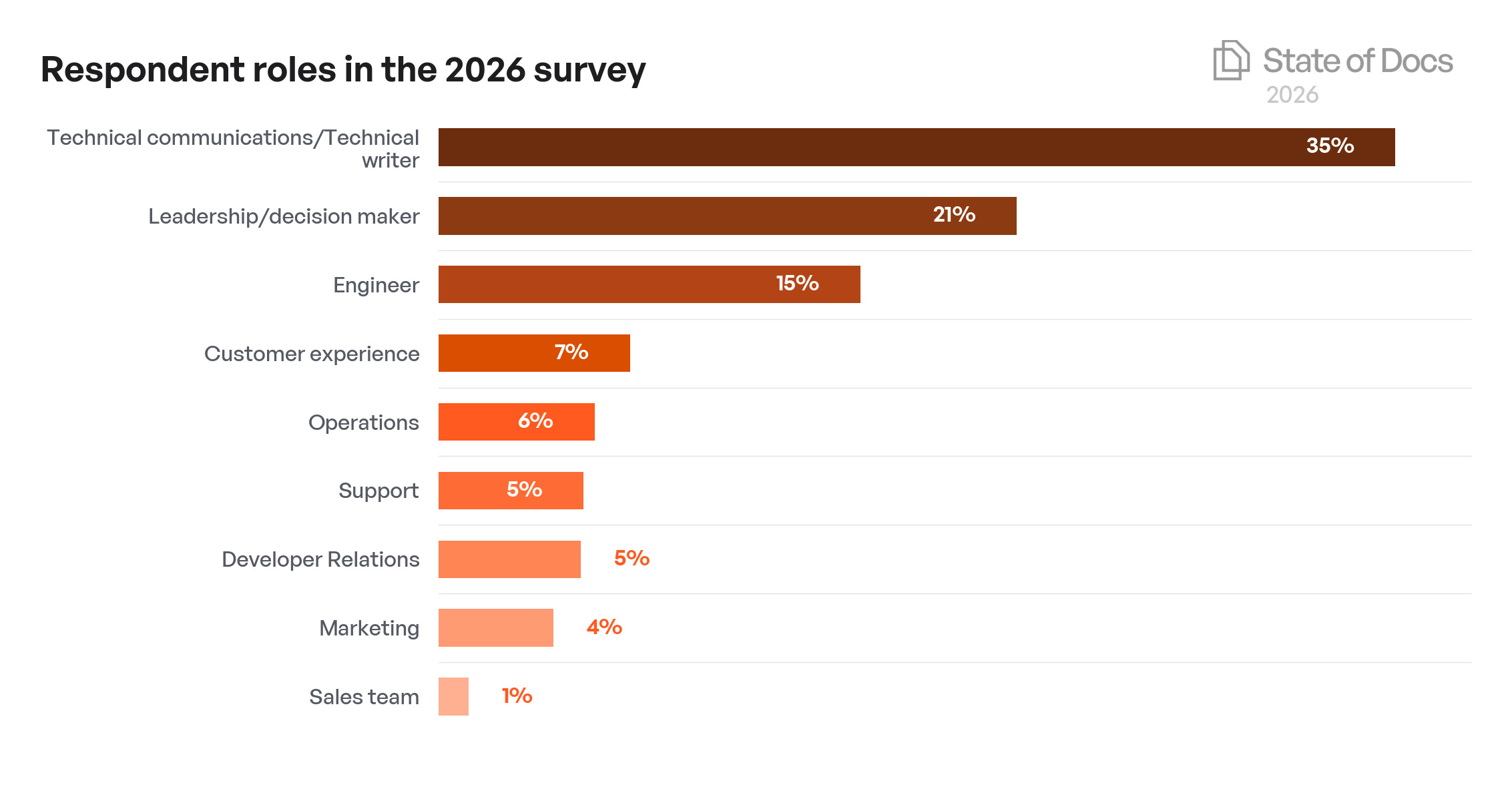
Technical writers are the largest group at 35%, but they're not the majority. The remaining 65% includes leadership and decision-makers (21%), engineers (15%), customer experience (7%), operations (6%), support (5%), developer relations (5%), and marketing (4%). This mix means the survey captures the perspectives of people who write docs alongside the people who fund them, build the products they describe, and use them to support customers. Documentation touches all of these roles, and the data reflect that.
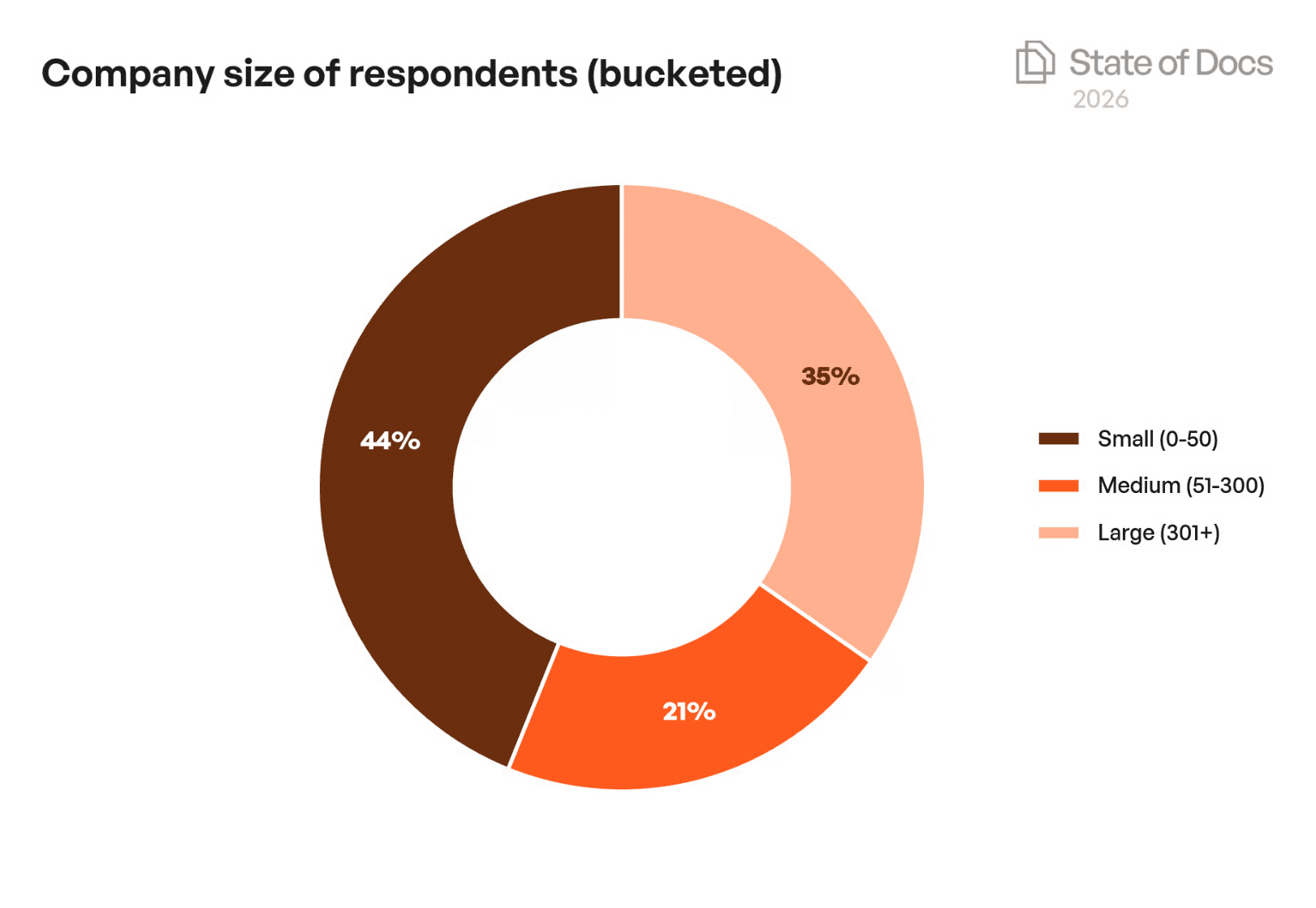
The company size spread is pretty even. Small companies (Freelance - 50 employees) and enterprises (301+) are the two largest segments with mid-market coming in with fewer respondents, though still well-represented.
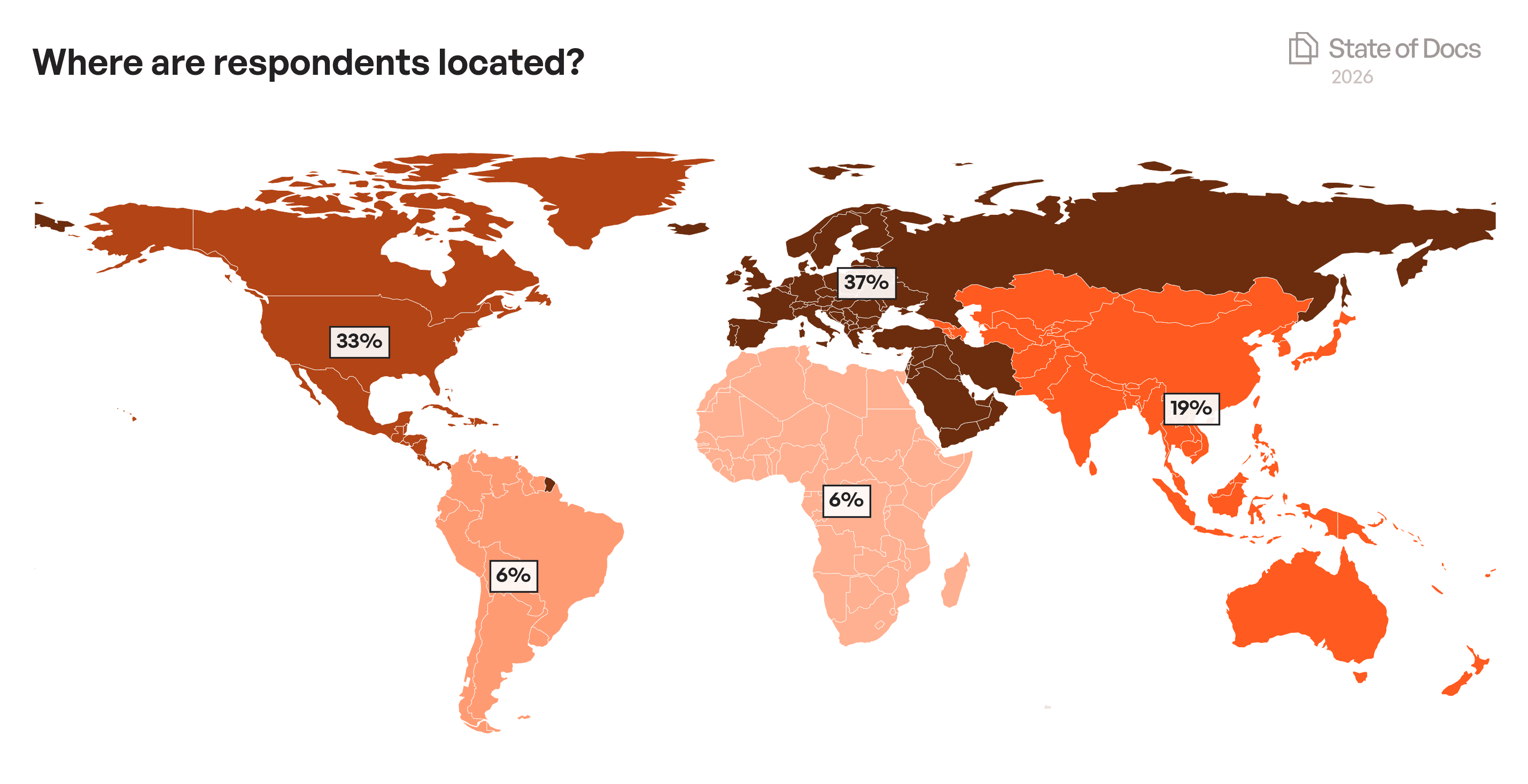
The data is global. Europe and the Middle East lead at 37%, followed by North America (33%), Asia-Pacific (19%), South America (6%), and Africa (6%).
This year's survey expanded its scope significantly. AI now gets two full sections — one on using AI to create documentation, one on AI-powered documentation consumption. Other new sections also cover documentation's relationship to the product lifecycle, tooling and information architecture, and career development. Where questions carried over from previous years and show significant changes, we include year-over-year comparisons at the end of each section.
Year-over-year comparison
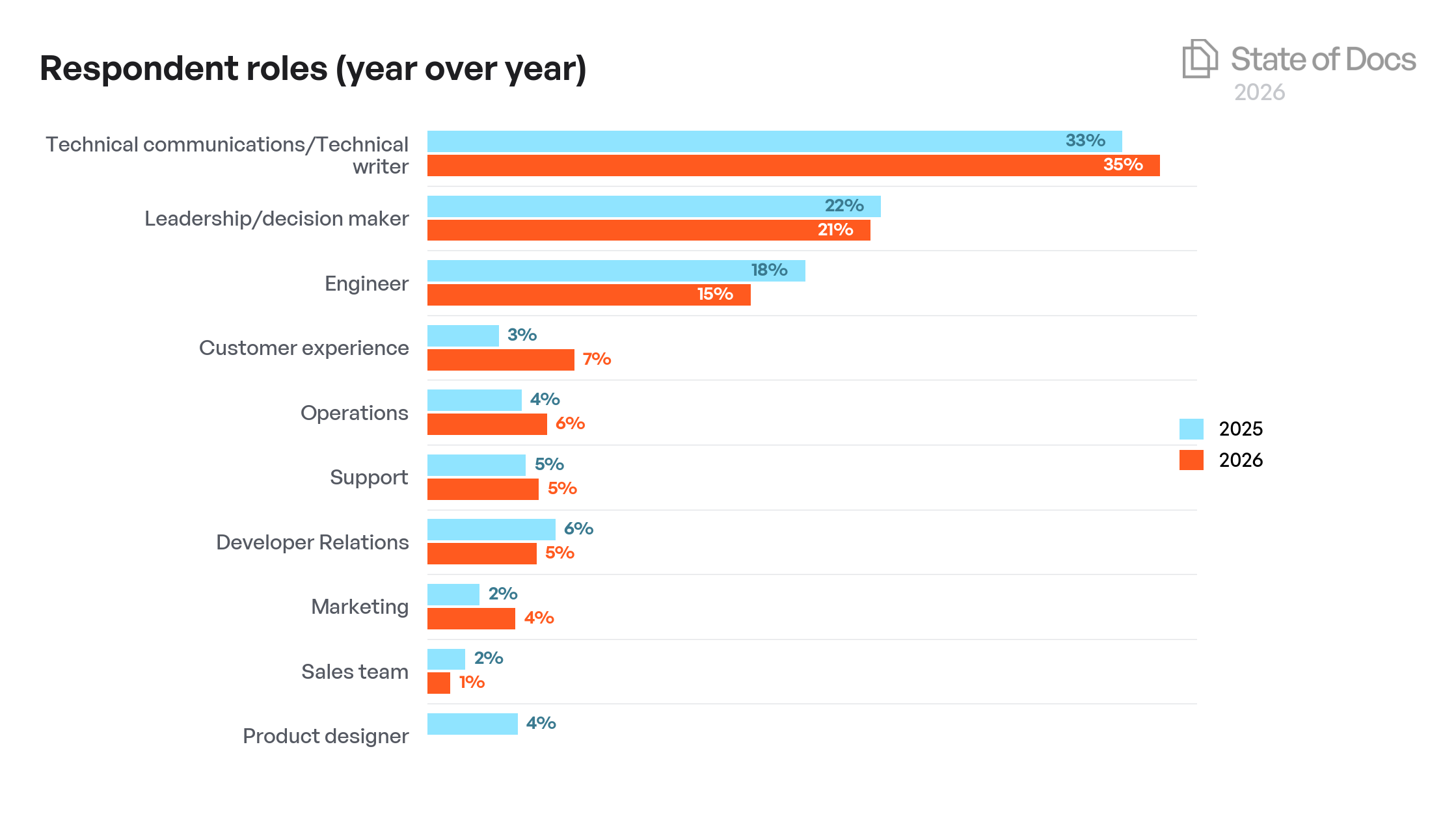
The role distribution remained broadly similar from 2025 to 2026, with technical writers forming the largest group in both years.
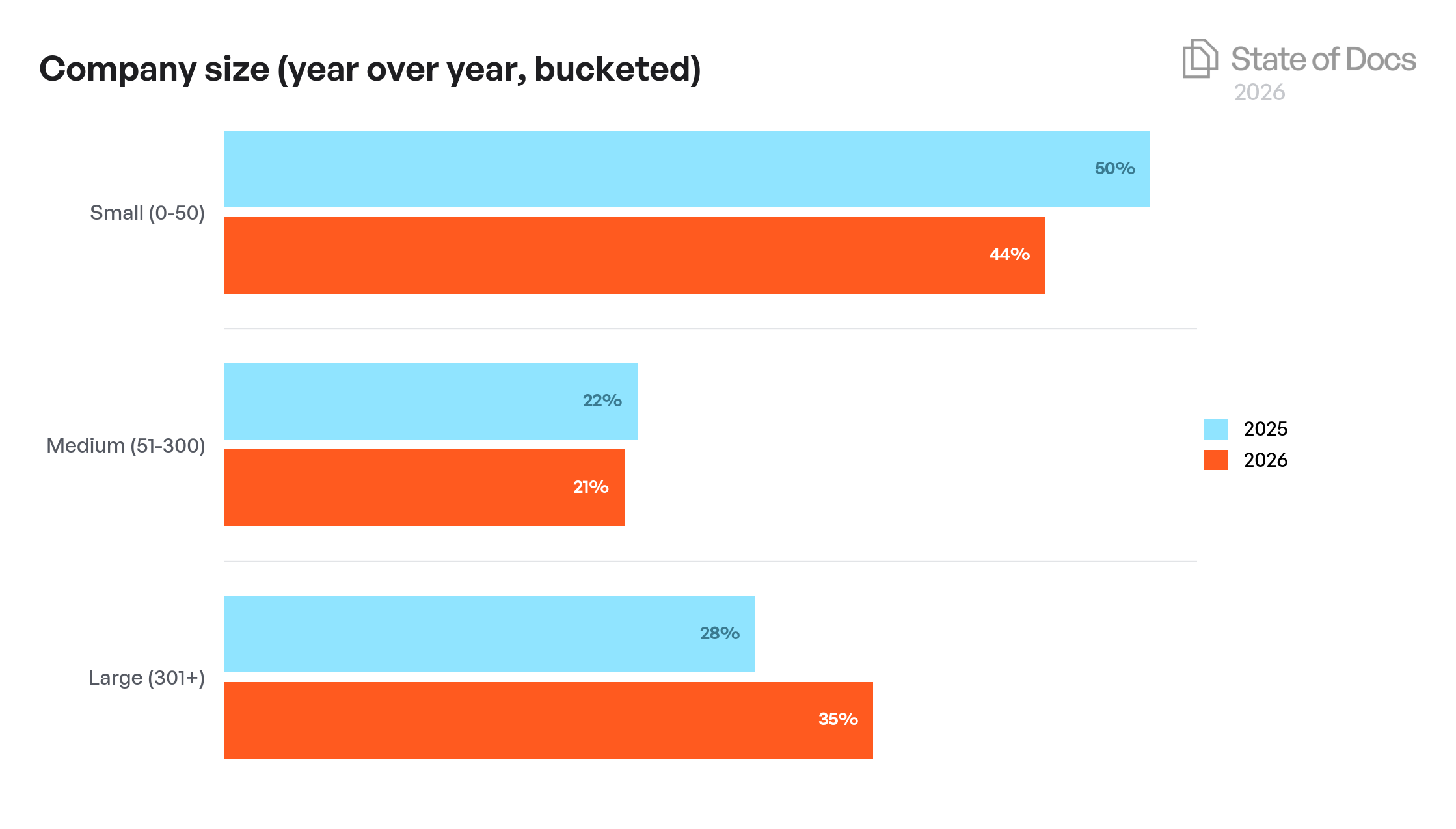
There was a slight decrease in the percentage of respondents from smaller companies, and a slight increase in the percentage from larger companies. Overall, though, the company size distribution remained fairly stable, with no single segment dominating in either year.
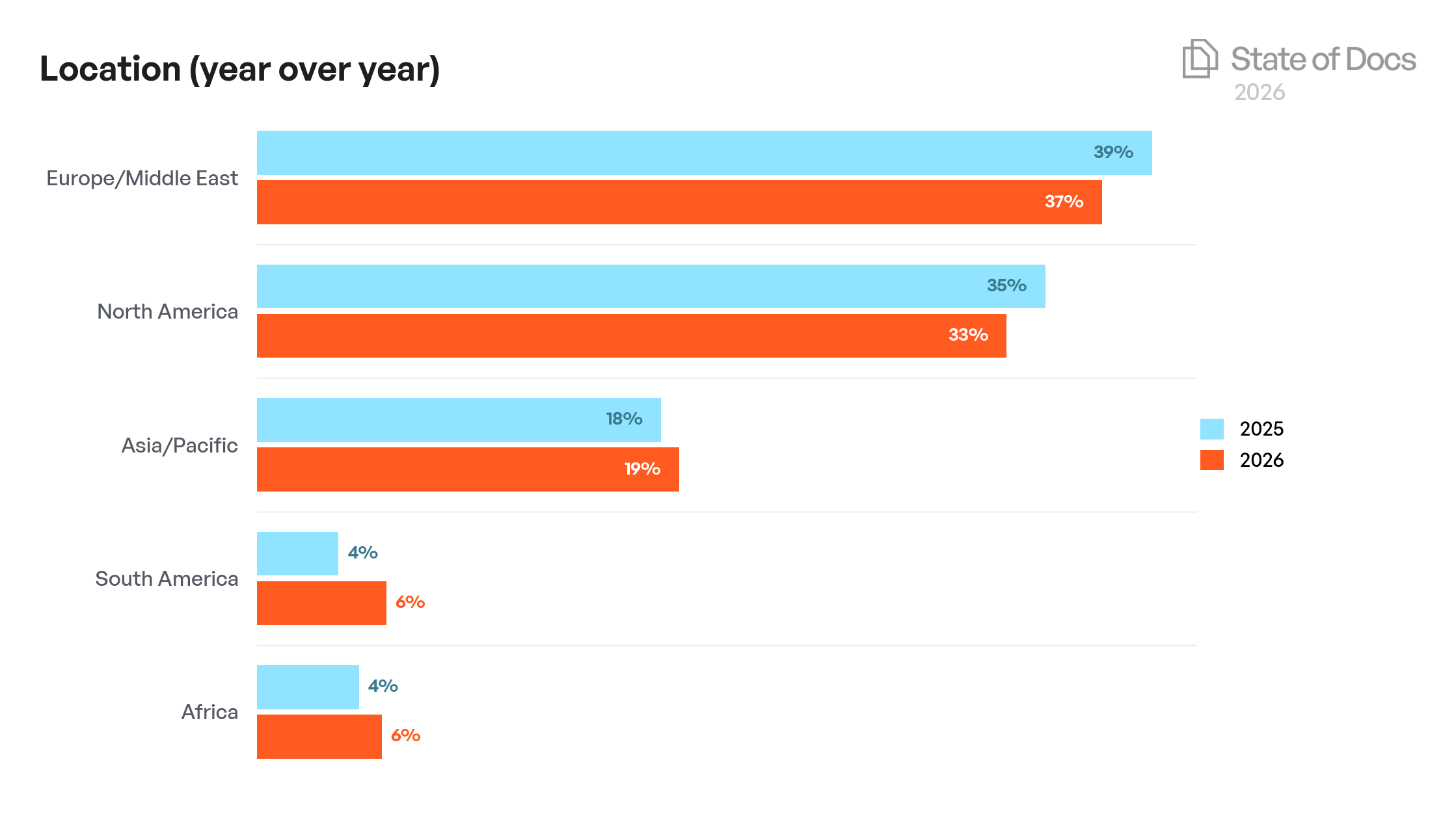
The overall geographic profile for respondents also remained similar to that of 2025.
Report structure